Water Quality and Coffee: Why Your Water Matters
Ask any experienced barista what the most underrated variable in coffee brewing is, and the answer will almost always be water. Coffee is roughly 98 percent water by weight in a finished cup. The quality, mineral content, and pH of that water shape every aspect of how your coffee tastes, from brightness and sweetness to body and aftertaste.
You can have the best beans in the world, a top-tier grinder, and perfect technique, and still end up with a flat, lifeless cup if your water is wrong. Understanding why water matters and what you can do about it is one of the most impactful upgrades a home brewer can make.
Why Water Chemistry Matters
Water is not just a passive carrier that dissolves coffee compounds. The minerals in water actively participate in extraction. Different minerals bond with different flavor compounds in coffee, pulling them into solution at different rates. Change the mineral profile and you change what ends up in your cup.
The two most important minerals for coffee brewing are calcium and magnesium.
Magnesium is particularly effective at bonding with the fruity, acidic compounds in coffee. Water with a higher magnesium content tends to produce brighter, more complex cups with pronounced acidity and fruit character.
Calcium bonds more readily with the heavier, fuller-bodied compounds. Calcium-rich water tends to produce cups with more body and a rounder, less sharp profile, but it can also dull the brighter notes.
Bicarbonate acts as a buffer, neutralizing acidity in the brewed coffee. A moderate amount of bicarbonate creates a balanced cup. Too much and the coffee tastes flat and chalky. Too little and the acidity can become sharp and overwhelming.
The interplay between these three components determines the character of your water for brewing purposes.
What Is TDS and Why Does It Matter?
TDS stands for Total Dissolved Solids, and it is a measure of the total mineral content in your water, expressed in parts per million. You can measure it with an inexpensive TDS meter, a small pen-shaped device you dip into a glass of water.
For coffee brewing, the ideal TDS range is 75 to 150 ppm. Within that range:
- 75 to 100 ppm tends to favor brighter, more acidic cups
- 100 to 150 ppm tends to favor fuller, more balanced cups
Water below 50 ppm is too soft. It is aggressive in extraction, pulling too many compounds too quickly, including unpleasant ones. Distilled or reverse osmosis water with no minerals at all produces hollow, sour, astringent coffee that is unpleasant to drink.
Water above 200 ppm is too hard. The excess minerals interfere with extraction, blocking desirable compounds from dissolving. Hard water produces flat, muted coffee with a chalky or metallic aftertaste. It also causes scale buildup in kettles and espresso machines, which is a separate but serious problem.
The SCA Water Standard
The Specialty Coffee Association has published a detailed standard for water quality in coffee brewing based on extensive research and cupping data. Their SCA Water Standard provides the following target ranges:
- TDS: 75 to 250 ppm, with a target of 150 ppm
- Calcium hardness: 17 to 85 ppm, with a target of 68 ppm
- Total alkalinity: Around 40 ppm
- pH: 6.5 to 7.5, with a target of 7.0
- Sodium: Below 10 ppm
- Odor: Clean, no chlorine, no off-odors
These numbers give you a framework. You do not need to hit every target precisely, but getting into the right neighborhood makes a noticeable difference.
Common Water Problems
Chlorine and Chloramine
Most municipal tap water is treated with chlorine or chloramine to kill bacteria. Both produce off-flavors in coffee. Chlorine gives a sharp, chemical taste. Chloramine is more subtle but still detectable.
The good news is that chlorine is easy to remove. A standard activated carbon filter, like a Brita pitcher or a faucet-mounted filter, will eliminate chlorine effectively. Chloramine is harder to remove and requires a catalytic carbon filter or a longer contact time with standard carbon.
If your tap water smells or tastes of chlorine, filtering it is the single most impactful thing you can do for your coffee. This one step alone often transforms the cup.
Excessively Hard Water
Hard water, common in many areas, contains high levels of calcium and magnesium carbonate. While some mineral content is good, too much creates problems:
- Flat, dull-tasting coffee with muted aromatics
- Chalky or metallic aftertaste
- Rapid scale buildup in kettles and espresso machines
- Reduced equipment lifespan
If your tap water TDS is above 200 ppm, you have several options. A water softener can reduce hardness, but traditional salt-based softeners replace calcium with sodium, which is not ideal for coffee either. A better approach for coffee brewing is to use a mixture of filtered water and distilled water to reach your target TDS.
Excessively Soft Water
Very soft water, common in areas with granite bedrock or in buildings with aggressive water treatment, has the opposite problem. With too few minerals, the water over-extracts and produces sharp, sour coffee with a hollow body.
If you have ever brewed coffee with distilled water and wondered why it tasted terrible, now you know. The minerals are not just passengers. They are active participants in extraction.
The solution for soft water is to add minerals back. This is easier than it sounds.
Practical Solutions for Home Brewers
Option 1: Filter Your Tap Water
For many people, a basic carbon filter is all you need. If your tap water has a TDS between 75 and 200 ppm and does not have an unusual taste or smell, filtering it to remove chlorine may be sufficient. Test your water with a TDS meter first to know what you are working with.
Good options include:
- Brita or similar pitcher filters remove chlorine and some sediment. Simple and cheap.
- BWT Penguin pitchers include magnesium-adding cartridges specifically designed for coffee and tea brewing. These are popular among European specialty coffee enthusiasts.
- Faucet-mounted carbon filters offer more capacity than pitchers and filter on demand.
Option 2: Build Your Own Water
For full control, you can create mineral water from scratch. Start with distilled or reverse osmosis water, which has a TDS near zero, and add precise amounts of minerals.
The most common approach uses two concentrate solutions:
Magnesium concentrate: Dissolve 2.45 grams of food-grade Epsom salt (magnesium sulfate) in 1 liter of distilled water.
Calcium concentrate: Dissolve 2.45 grams of food-grade baking soda (sodium bicarbonate) in 1 liter of distilled water.
To make 1 liter of brewing water, combine specific amounts of each concentrate with distilled water. Different ratios produce different flavor profiles. A good starting point is:
- 50 ml of magnesium concentrate
- 50 ml of calcium concentrate
- 900 ml of distilled water
This gives you water with moderate mineral content weighted toward magnesium, which tends to produce bright, flavorful cups. Adjust the ratios based on your taste preferences and the coffee you are brewing.
Option 3: Bottled Water
Some bottled water brands fall within or near the ideal range for coffee brewing. Check the mineral analysis on the label. You want:
- TDS between 75 and 150 ppm
- Low sodium
- Moderate calcium and magnesium
- Neutral pH
In many European countries, several widely available mineral waters work well for coffee brewing. Look for brands that publish their mineral content transparently. Avoid heavily mineralized waters marketed for their mineral content, as these are almost always too hard for coffee.
Testing Your Water
A TDS meter costs between 10 and 20 euros and is an essential tool for any serious home brewer. It does not tell you the full picture, since it measures total minerals without distinguishing between them, but it gives you a useful baseline.
For more detailed analysis, you can use aquarium test kits to measure general hardness and carbonate hardness separately. These are inexpensive and available at pet stores. For a complete profile, some water utilities publish annual quality reports that include detailed mineral breakdowns.
How Water Affects Different Brewing Methods
Water quality matters for all brewing methods, but the impact varies:
Espresso is the most sensitive. The concentrated nature of espresso magnifies every characteristic of your water. Hard water can cause scale buildup in the machine’s boiler and group head, and the flavor impact is immediately noticeable. Most espresso machines benefit from water in the 50 to 100 ppm range, slightly lower than the SCA target.
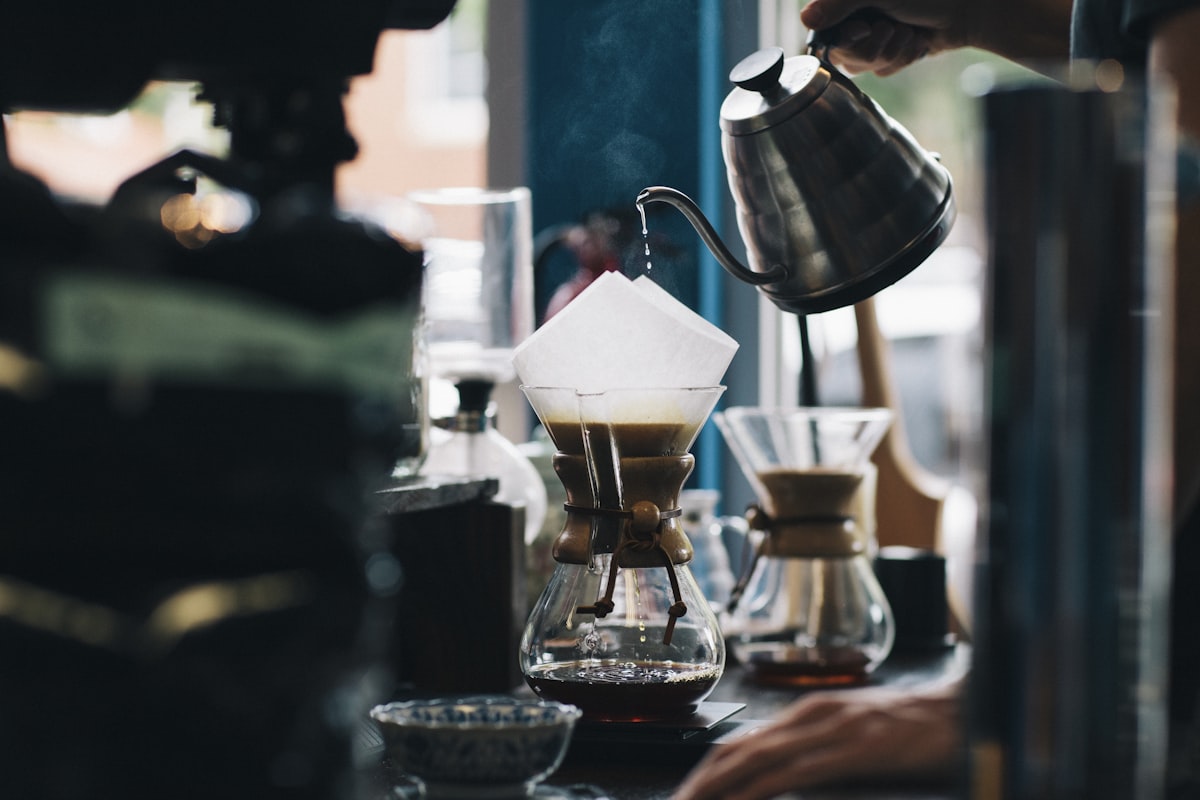
Pour over responds strongly to water chemistry because the clean, filter-paper-separated brew lets every nuance through. This is where water adjustments have the most audible effect on flavor clarity and acidity.
French press and immersion methods are somewhat more forgiving because the full-bodied, oil-rich brew masks some water-related issues. But even here, excessively hard or soft water will produce a noticeably worse cup.
Cold brew is the most forgiving. The long, low-temperature extraction smooths out many water-related issues. That said, starting with decent water still improves the result.
The Practical Takeaway
You do not need to become a water chemist to brew great coffee. Here is a simple approach:
- Buy a TDS meter and test your tap water
- If the TDS is between 75 and 150 ppm, simply filter it through a carbon filter to remove chlorine
- If the TDS is below 75 or above 200, consider building your own water or finding a suitable bottled option
- Taste the difference, because you will notice one
Water is the foundation that everything else in coffee brewing is built on. Getting it right does not require much effort or money, but the improvement in your daily cup can be dramatic.